
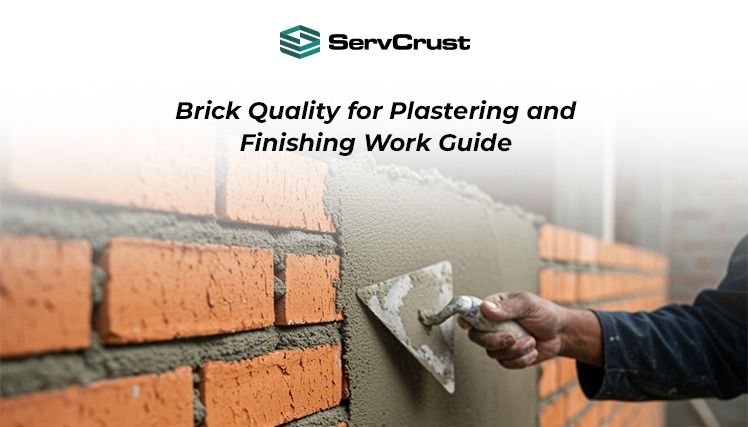
Brick quality for plastering and finishing work decides how your walls finally look and how long they stay strong. Many people focus only on cement or paint, but the real base of smooth wall surface finishing starts with the brick itself. When builders choose good quality bricks for construction, plaster bonds better, finishing becomes easier, and future repairs reduce.
Poor bricks may save money at the start, yet they often create cracks, uneven surfaces, and higher finishing costs later. Understanding how brick quality influences masonry finish quality helps builders, homeowners, and suppliers make smarter decisions.
What brick Quality for Plastering and Finishing Work Really Means
Brick quality is not only about strength. It includes shape accuracy, surface texture, and moisture behavior. Even small variations in size affect brick wall finishing quality because plaster thickness becomes uneven.
When bricks absorb too much water, plaster loses its bonding strength. This happens often when builders skip simple checks like the brick water absorption test. Consistent bricks allow smooth wall surface finishing and reduce labour effort during plastering.
Brick Porosity Construction and Plaster Bonding Strength
Brick porosity construction plays a major role in finishing defects in walls. Highly porous bricks pull water from plaster quickly, which leads to weak adhesion. Over time, this causes peeling layers or visible cracks.
Builders who understand brick quality for plastering focus on balanced absorption. The right level allows plaster to stick without drying too fast.
Brick Quality vs Plaster Finish Changes Wall Appearance
A smooth plaster finish does not depend only on skilled labour. The base material decides how the final surface looks. Best bricks for wall plastering have uniform edges and stable strength.
Uneven bricks create waves on the wall surface, forcing workers to apply thicker plaster layers. This increases material use and slows down finishing work. When builders use good quality bricks for construction, they achieve better masonry finish quality with less effort.
Brick Water Absorption Test and Wall Surface Finishing
Simple site tests help avoid future issues. The brick water absorption test shows whether bricks hold too much moisture. Balanced absorption supports strong plaster bonding strength and reduces long-term maintenance.
When builders skip this step, plastering defects brickwork often appear later, even if the plaster mix is correct.
Common Plastering Defects Brickwork Can Cause
Many finishing problems begin with poor brick selection. Cracks on walls often relate to uneven absorption and low-quality materials rather than plaster quality alone.
High porosity bricks may cause moisture stains or powdery surfaces after painting. Some walls develop hollow sounds because plaster fails to bond evenly. These issues increase repair costs and delay project completion.
Why Brick Porosity Leads to Finishing Defects in Walls
Bricks with irregular pores trap moisture inside the wall. Over time, salts move to the surface and create white patches. This affects brick wall finishing quality and makes repainting necessary sooner than expected.
Builders who understand construction material quality standards reduce such risks by choosing reliable materials from trusted suppliers.
Brick Selection Mistakes Builders Often Make
One common mistake is choosing cheaper bricks without checking consistency. Low-grade bricks may look fine during masonry work, yet problems appear during plastering and finishing work.
Another mistake involves ignoring material quality impact on finishing cost. Builders sometimes believe thinner plaster saves money, but poor brick surfaces require thicker layers to achieve smooth finishing.
Good Quality Bricks for Construction Improve Long-Term Results
Uniform shape, proper strength, and balanced absorption make a big difference. These features allow faster plaster application and reduce labour stress. Over time, walls remain stable and painting cycles become less frequent.
Best Bricks for Wall Plastering and Masonry Finish Quality
Different brick types behave differently during finishing. Traditional clay bricks provide strong bonding when they meet standard size and strength requirements. Fly ash bricks often offer smoother surfaces, which support better plaster adhesion. AAC blocks require different handling but can still achieve good wall surface finishing when installed correctly.
Builders should always consider brick quality for plastering instead of choosing materials based only on price or availability.
How Reliable Construction Material Supplier Support Better Finishing
Working with a trusted construction material supplier helps maintain consistent quality. Reliable platforms provide materials that follow construction material quality standards, reducing site-level uncertainty.
For projects in Hyderabad, many builders prefer ordering from a building material supplier for bricks Hyderabad who understands local construction needs. Some even choose to buy good quality bricks online Hyderabad through a construction material platform to save time and maintain supply consistency.
How Brick Quality Affects Overall Finishing Cost
Poor bricks often lead to thicker plaster layers, extra labour hours, and repeated repairs. Even small finishing defects in walls increase painting costs later.
When builders choose high-quality bricks from the beginning, plaster spreads evenly and dries at the right pace. This reduces material wastage and improves the overall project timeline.
Good brick selection also supports better alignment during masonry work, which improves masonry finish quality and reduces surface corrections.
Conclusion
Brick quality for plastering and finishing work decides how smooth, durable, and cost-efficient your walls become. Balanced absorption, uniform shape, and strong brick bonding properties reduce cracks and finishing defects. Choosing the best bricks for wall plastering not only improves appearance but also lowers long-term maintenance expenses.
FAQ’s:
1. Why does plaster crack on brick walls?
Cracks often appear when bricks absorb too much water or have uneven surfaces. Balanced brick quality helps plaster bond strongly and stay stable.
2. How does brick absorption affect plastering?
High absorption pulls moisture from plaster quickly, which weakens adhesion and leads to peeling or cracks.
3. Which bricks give smooth wall finishing?
Uniform clay bricks or well-made fly ash bricks usually provide better wall surface finishing because of their consistent size and texture.
4. Can poor brick quality increase finishing cost?
Yes. Builders may need thicker plaster layers and extra labour, which raises overall expenses.
5. What brick quality is best for plastering work?
Bricks with balanced absorption, proper strength, and accurate dimensions deliver the best masonry finish quality.
6. Do hollow bricks need different plastering?
They often require careful curing and bonding preparation to achieve strong plaster adhesion.
7. How to check brick quality before construction?
Simple checks like the sound test, visual inspection, and brick water absorption test help identify good quality bricks for construction.