
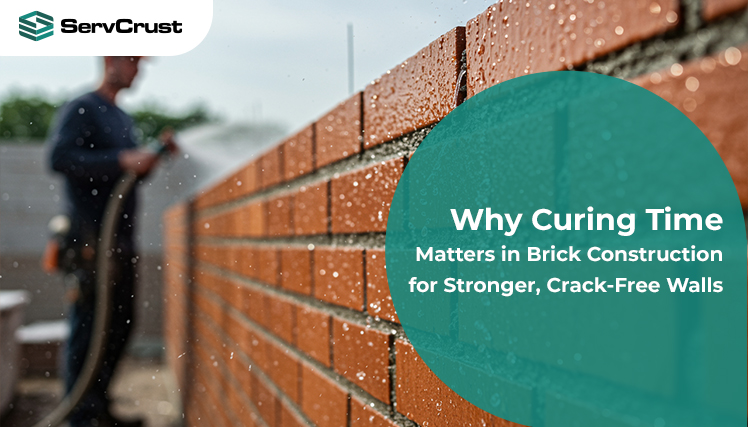
Why curing time matters in brick construction is something many people ignore, but it plays a big role in how strong and durable a building becomes. No matter if you use red brick, AAC brick, hollow brick, or even paver block and pavement blocks, proper brick curing decides the final quality.
When curing is done right, bricks gain strength, hold better bonding, and last longer. When it is skipped or rushed, walls may crack, weaken, and need repairs early. That is why understanding brick curing in construction is important before starting any project.
What is Brick Curing in Construction?
Brick curing is the process of keeping bricks and masonry wet for a few days after construction. This helps the cement and mortar gain strength. Water plays a key role here. It supports the chemical reaction that gives strength to the structure. Without enough moisture, the bonding becomes weak.
This simple step improves:
- Cement bonding strength
- Brick durability
- Overall construction quality
Importance of Curing in Construction
The importance of curing in construction goes beyond just wetting the walls. It directly affects how safe and long-lasting your building will be.
When proper curing happens, bricks become stronger and can handle more load. This answers a common concern many people have about whether curing increases brick strength it clearly does.
Curing also helps avoid early damage. Many people notice cracks in walls after construction. In most cases, poor curing is the reason behind it. Good curing supports wall crack prevention and keeps surfaces smooth.
How Long is Brick Curing Time Enough?
One common doubt is how long to cure bricks before construction is considered complete. In most cases, brick curing time should be at least 7 to 14 days. This duration allows proper strength development.
Different materials may need slightly different care:
- Red brick curing: Needs regular water for 7–10 days
- AAC brick curing: Requires controlled curing, less water but proper timing
- Hollow brick curing: Needs consistent moisture to avoid cracks
- Concrete paving blocks / paver block: Usually cured before delivery, but site curing is still important
Many people also wonder how many days bricks should be watered. The answer depends on weather, but daily watering during the curing period is essential.
Curing Methods Used on Site
There are simple and effective construction curing methods used across projects. The most common method is manual water curing. Workers sprinkle water on the walls several times a day. This keeps the surface moist.
Another method includes ponding or covering the surface with wet materials. This helps retain moisture for longer periods. Choosing the best curing method for brick construction depends on site conditions, but the goal remains the same keep the bricks hydrated.
What Happens If Brick Curing is Not Done Properly?
Skipping curing may save time for a few days, but it creates bigger problems later. Bricks lose strength when they do not get enough moisture. This leads to weak bonding between materials.
Walls may start showing cracks within a short time. This often makes people question what happens if curing is not done properly. The answer is simple reduced strength, early damage, and higher repair costs. Poor curing also affects durability. The structure may not last as long as expected.
What Buyers Should Know About Brick Quality and Curing
Many people focus only on price when buying bricks. But good quality bricks for construction depend heavily on proper curing. If bricks are not cured well, they may look fine but perform poorly.
You can check brick quality by:
- Observing surface finish
- Checking hardness
- Looking for cracks or breakage
Understanding curing helps buyers make better decisions. It also answers a common doubt can curing be skipped in brick construction? It should never be skipped.
Choosing the Right Building Material Supplier
A reliable building material supplier plays a big role in ensuring quality. If you are sourcing from a construction material supplier in Hyderabad, always check if the bricks and blocks are properly cured. This applies to AAC bricks, red bricks, hollow bricks, and concrete paving blocks.
A trusted construction material platform ensures:
- Consistent quality
- Proper curing practices
- Transparent AAC bricks price and product details
Choosing the right supplier saves time, cost, and future repairs.
Does Curing Affect Cost?
Many buyers compare only the price of AAC bricks or other materials. But curing directly affects long-term value. Proper curing may not change the initial price much, but it reduces maintenance costs later. Poor curing leads to cracks, repairs, and repainting expenses. So, investing in well-cured bricks always gives better returns.
Conclusion
Curing is not just a routine step. It is the foundation of strong construction. Understanding why curing time matters in brick construction helps you build safer and longer-lasting structures. It improves strength, prevents cracks, and ensures better performance. Whether you are building a home or managing a project, always focus on proper curing and choose a trusted construction material supplier.
FAQs
1. What is the curing time for bricks?
Brick curing usually takes 7 to 14 days depending on weather and material type.
2. Why is curing important in construction?
Curing improves strength, bonding, and durability of bricks and concrete.
3. What happens if curing is not done properly?
It leads to weak walls, cracks, and reduced lifespan of the structure.
4. How do you cure bricks on site?
By regularly sprinkling water or keeping surfaces moist for several days.
5. Does curing increase brick strength?
Yes, proper curing significantly improves brick strength and performance.
6. What is the curing time for AAC blocks?
AAC bricks need controlled curing and usually require less water than red bricks.
7Can we skip curing in brick construction?
No, skipping curing can cause serious structural issues and early damage.