
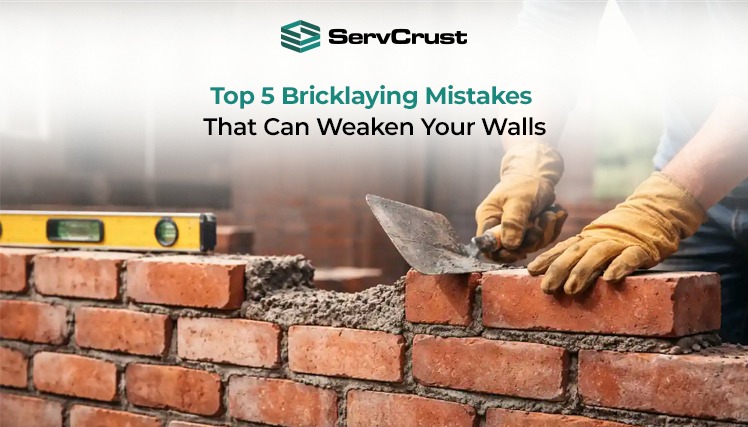
Bricklaying mistakes are a common reason why walls lose strength or develop cracks over time. Many buildings use strong materials like red bricks, AAC bricks, or hollow bricks, but poor brickwork can still weaken the structure. Small mistakes during brick wall construction may not look serious at first, yet they often cause long-term damage.
In many projects, issues such as incorrect mortar ratio, poor brick alignment, or improper bonding lead to brick wall defects and reduced durability. Builders sometimes focus only on speed, while basic bricklaying best practices receive less attention. When brickwork does not follow proper methods, the wall may crack, shift, or lose stability.
Understanding these bricklaying mistakes helps contractors, homeowners, and construction teams build stronger and safer walls. It also highlights why using good quality brick for construction and working with a reliable construction material supplier makes a big difference.
Why Bricklaying Quality Matters for Wall Strength
Brick walls look simple, but every layer plays an important role. Each brick must connect well with the next one. Mortar must hold the bricks firmly in place. Alignment must stay straight so the wall carries weight evenly.
When workers follow proper bricklaying techniques, the wall becomes strong and stable. But when common bricklaying mistakes occur, the wall may lose strength. Cracks, uneven surfaces, and water seepage often appear because of poor brickwork.
Strong walls depend on three main things: good brick quality, correct mortar ratio, and careful brick placement. When all these elements work together, the wall lasts longer and requires less repair.
Common Bricklaying Mistakes That Affect Wall Durability
Many brick wall construction mistakes happen during basic masonry work. These errors may seem small but they can affect the overall strength of the building.
Some of the most common problems include weak mortar bonding, uneven brick placement, poor bonding patterns, and inconsistent joint thickness. These issues often appear when construction teams rush the work or ignore proper masonry techniques.
Learning about these problems early helps avoid costly repairs later.
Incorrect Mortar Ratio in Brickwork
Mortar acts like glue between bricks. If the mortar mix is too weak, bricks will not bond properly. Over time, the joints may crack or loosen.
An incorrect mortar ratio brickwork problem often happens when sand and cement are not mixed in the right proportion. Weak mortar reduces brick wall strength and may allow moisture to enter the wall.
Proper mixing ensures strong bonding between bricks. Consistent mortar quality also helps keep the wall stable and durable.
Poor Brick Alignment Problems
Brick alignment plays a key role in brick wall construction. Each row must stay straight both horizontally and vertically. If bricks shift out of line, the wall may carry weight unevenly.
Poor brick alignment problems often lead to uneven walls and weak sections. These areas may develop cracks faster than the rest of the wall.
Using simple tools like leveling lines and checking alignment regularly helps prevent this mistake. Careful placement ensures better wall stability.
Improper Brick Bonding Patterns
Brick bonding connects bricks in a pattern that improves wall strength. When bonding is done correctly, each brick supports the others.
Brick bonding mistakes occur when vertical joints align in the same position across multiple layers. This weakens the wall because the bricks no longer interlock properly.
A proper bonding pattern spreads weight evenly and prevents structural weaknesses. Good bricklaying best practices always focus on correct bonding.
Using Poor Brick Quality for Construction
Even perfect bricklaying cannot fix weak bricks. Low-quality bricks absorb too much water and break easily. Over time, this affects the strength of the wall.
Good brick quality helps ensure strong and durable masonry. Bricks should have uniform shape, smooth edges, and consistent size.
Builders often compare red bricks vs AAC bricks for walls before choosing materials. Red bricks provide traditional strength, while AAC bricks offer lightweight and thermal benefits. Both can perform well when the quality is good.
Before construction begins, checking brick quality helps avoid many brick wall defects and causes of wall failure.
Uneven Mortar Joint Thickness
Mortar joints connect bricks and distribute loads across the wall. If joint thickness changes from one area to another, the wall may lose stability.
Very thick mortar joints weaken bonding. Very thin joints may not hold bricks properly. Both situations create weak points in the structure. Maintaining consistent joint thickness improves bonding and supports better load distribution.
Choosing the Right Bricks for Strong Walls
Different bricks serve different construction needs. Selecting the right type helps improve wall performance and durability. Red bricks remain a popular choice in many projects. They provide strong support for traditional masonry work.
AAC bricks have become common in modern buildings. They are lightweight and provide better thermal insulation. Many builders also consider AAC brick installation mistakes when planning construction because these blocks require different mortar techniques.
Hollow bricks offer another option. They reduce building weight and improve energy efficiency.
Builders also look at red bricks price in Hyderabad or AAC bricks price before selecting materials. Cost matters, but brick quality for strong walls should always come first.
How to Lay Bricks Correctly for Better Results
Good brickwork requires careful attention during every step of construction. Workers must place bricks evenly, maintain proper mortar mix, and follow the correct bonding pattern.
Bricklaying best practices focus on steady progress rather than rushing the work. Proper curing, alignment checks, and quality inspection help maintain strong walls.
When construction teams follow these simple steps, they reduce the chances of brick wall defects and causes of structural weakness.
Reliable building material suppliers also support better construction by providing consistent brick quality and dependable supply.
Conclusion
Brick walls form the backbone of many buildings. Yet small bricklaying mistakes can slowly weaken them over time. Problems like incorrect mortar ratio, poor brick alignment, weak bonding patterns, and uneven joints often lead to cracks and structural issues.
Using good quality brick for construction and following proper bricklaying techniques helps prevent these problems. Builders who pay attention to material quality and masonry practices create stronger, longer-lasting walls.
Working with a trusted building construction material supplier or construction material platform India also ensures reliable materials for every project. When bricklaying is done correctly, walls stay strong, stable, and safe for many years.
FAQs
1. What are the most common bricklaying mistakes?
Common bricklaying mistakes include incorrect mortar ratio, poor brick alignment, improper bonding patterns, uneven mortar joints, and using low-quality bricks.
2. What happens if mortar ratio is incorrect in brickwork?
If the mortar ratio is incorrect, bricks may not bond properly. This can lead to cracks, loose bricks, and reduced wall strength.
3. How do you identify good quality bricks?
Good quality bricks have uniform size, sharp edges, and low water absorption. They should feel solid and not break easily.
4. Which bricks are best for wall construction?
Red bricks, AAC bricks, and hollow bricks are commonly used depending on structural needs, insulation requirements, and project budget.
5. What causes brick walls to crack?
Brick walls may crack due to weak mortar bonding, poor brick alignment, improper bonding patterns, or low-quality construction materials.
6. How thick should mortar joints be in brickwork?
Mortar joints usually stay around 10 mm thick. Consistent joint thickness helps maintain strong bonding between bricks.
7. Can poor brick quality weaken walls?
Yes. Low-quality bricks absorb more water and break easily, which can reduce the strength and durability of the wall.
8. How can brick masonry defects be avoided?
Brick masonry defects can be avoided by using proper mortar mix, maintaining alignment, following correct bonding patterns, and choosing good quality bricks from reliable suppliers.